Zayt Magazine
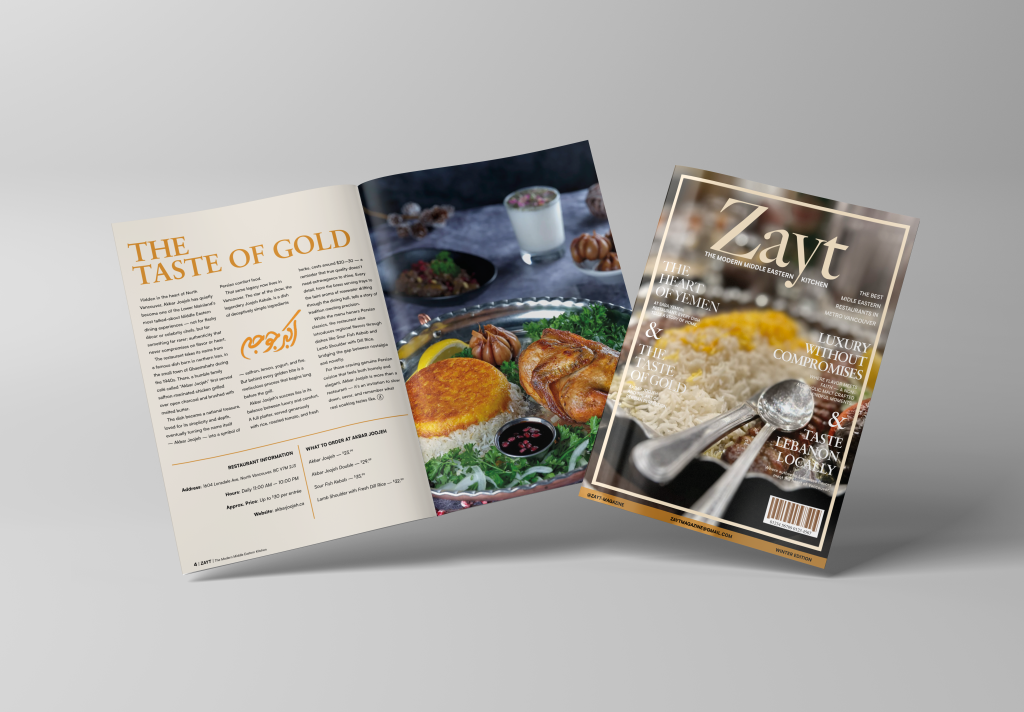
Project Overview ZAYT is a food and culture magazine focused on Middle Eastern restaurants in Metro Vancouver. The project was designed as a full editorial publication, bringing together restaurant features, food photography, cultural storytelling, advertisements, infographics, and magazine-style layouts. The goal was to create something that felt warm, elegant, and food-focused while still being modern enough for a local Vancouver audience. I wanted the magazine to feel less like a simple restaurant guide and more like a curated dining experience, where every spread introduces a place, a dish, or a story with its own mood. Editorial Concept The concept behind ZAYT was to celebrate Middle Eastern food through both design and storytelling. Each restaurant feature was written and designed to highlight more than just the menu. I wanted to show the atmosphere, culture, comfort, and memory behind the food. The magazine includes features on restaurants such as Akbar Joojeh, Saba Yemeni Restaurant, Yasmina, Cazba Persian Grill, Sahel Market & Restaurant, Damaskino Shawarma, and others. Each spread uses a different layout approach while still staying connected through the same overall editorial identity. Design direction The visual direction was built around warmth, elegance, and cultural detail. I used cream backgrounds, gold and brown tones, serif typography, decorative borders, and Middle Eastern-inspired patterns to give the magazine a refined but inviting feeling. The design needed to feel premium, but not cold or overly formal. Food photography played a major role in shaping the layouts. Some spreads use large full-page images to create impact, while others use smaller photo blocks, menus, pull quotes, and restaurant information boxes to guide the reader. The challenge was balancing strong visuals with readable editorial content. Visual system The magazine uses a consistent visual system across the full publication, but each section has its own personality. Restaurant features use large titles, structured text columns, food imagery, and information boxes for address, hours, pricing, and menu recommendations. The typography combines elegant serif headlines with clean body text, helping the magazine feel both cultural and readable. Decorative details, borders, subtle patterns, and warm colour accents help connect the pages without making every spread look the same. Feature spreads Each restaurant spread was designed to tell a small story. Some pages focus on atmosphere and restaurant identity, while others highlight a signature dish or cultural detail. The Akbar Joojeh spread became the main infographic piece, using an anatomy-style layout to break down the plate, ingredients, origin, and food traditions in a more visual way. Other spreads use a more editorial structure, combining photography, text columns, restaurant details, and menu recommendations to create a complete reading experience. This helped the magazine feel varied while still staying connected through the same tone, typography, and visual language. I also created supporting pages and advertisements, including an Uber Eats ad, a BC Halal Food Festival spread, and a halal non-alcoholic beverage ad. These pieces helped the magazine feel more complete and realistic, like a publication that could actually exist with editorial content and sponsored sections. Final Reflection This project helped me understand how much planning goes into a full magazine design. It was not only about making individual pages look good; the whole publication had to feel connected from cover to final spread. I had to think about pacing, image placement, typography, margins, spacing, and how each page would feel as part of a larger reading experience. Working on ZAYT also pushed me to think more carefully about cultural tone. Since the magazine focused on Middle Eastern food and restaurants, the design needed to feel respectful, warm, and authentic without becoming too decorative or cliché. The challenge was finding a balance between elegance, readability, and cultural atmosphere. Overall, ZAYT became one of my strongest editorial projects because it brought together writing, layout, food photography, branding-style details, infographic design, and publication design. It taught me how to build a visual rhythm across many pages while still giving each story its own identity.